Projects Overview
Explore some of the impactful projects I’ve worked on, showcasing the application of advanced computational techniques to solve real-world problems. Each project highlights a unique approach to addressing technical challenges with a significant societal impact. Click on the project title to learn more about its goals, methodology, and outcomes.
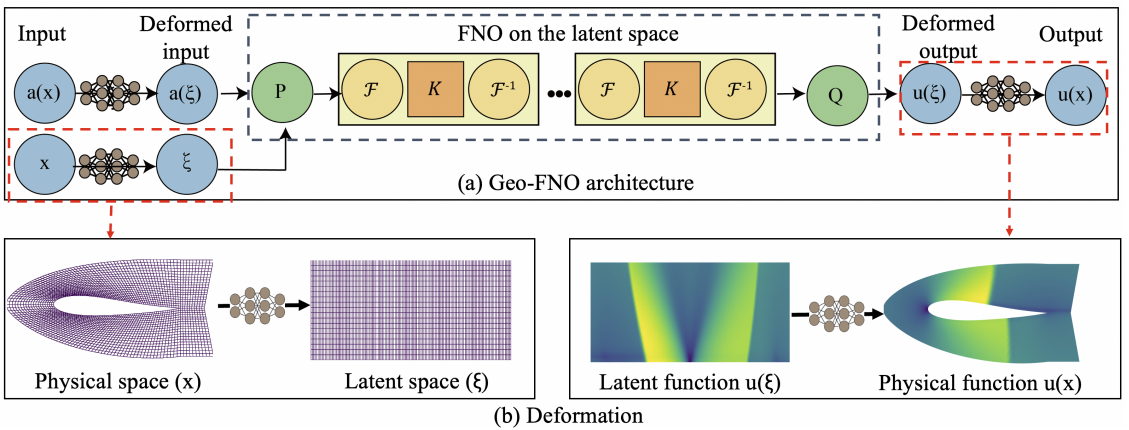
1. Open-Source GeoFNO Implementation for Irregular Geometries in PDE Solvers
Introduction:
Partial differential equations (PDEs) are essential for simulating physical phenomena across fields such as engineering and healthcare. This project focuses on overcoming the limitations of traditional PDE solvers in handling irregular geometries. By implementing Geo-FNO within the Unified PDE Solver (UPS) framework, we aim to provide accessible and scalable simulation capabilities.
Social Impact:
This work enhances infrastructure safety, promotes environmental sustainability, and supports healthcare innovation by enabling simulations for real-world geometries.
GitHub Link: Coming soon (will be added post-research publication).
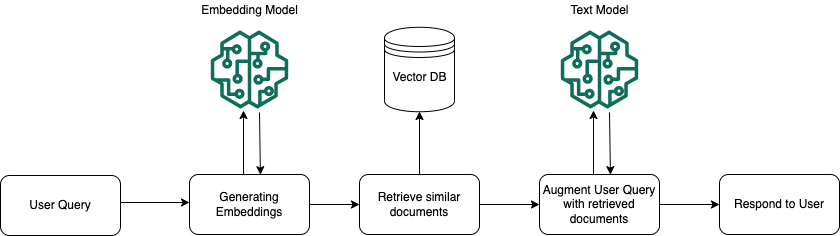
2. Developing a Retrieval-Augmented Generation (RAG) System for Factual Question-Answering
Introduction:
The Retrieval-Augmented Generation (RAG) approach integrates retrieval mechanisms with large language models (LLMs) to enhance factual question-answering. This project developed a RAG system to provide concise answers to questions about Pittsburgh and CMU, streamlining access to information within large datasets.
Social Impact:
By providing accurate, real-time answers, this system simplifies access to complex datasets, making information more accessible to students, researchers, and the public.
GitHub Link: RAG-QA-LLM-Pipeline
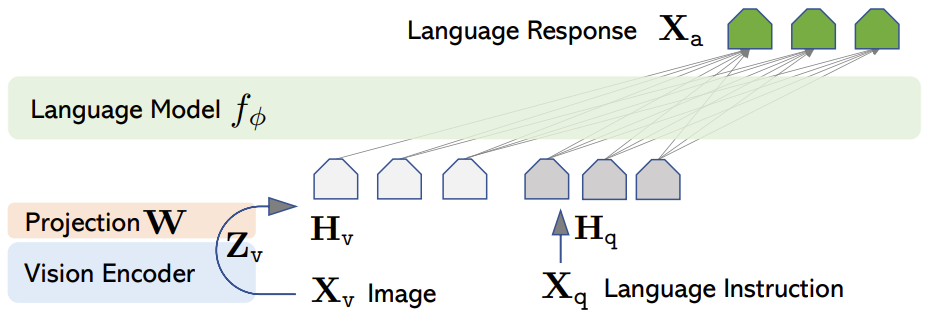
3. Fine-tuning LLaVA for Scientific and Chart-Based Visual Question Answering
Introduction:
LLaVA is a multimodal model built to interpret complex vision-and-language tasks. This project fine-tunes LLaVA for scientific visual content and charts, enabling researchers and educators to efficiently extract insights from complex visual data.
Social Impact:
This project democratizes access to scientific insights, empowering researchers, students, and educators to analyze and understand complex visualizations effortlessly.
GitHub Link: Llava4Science
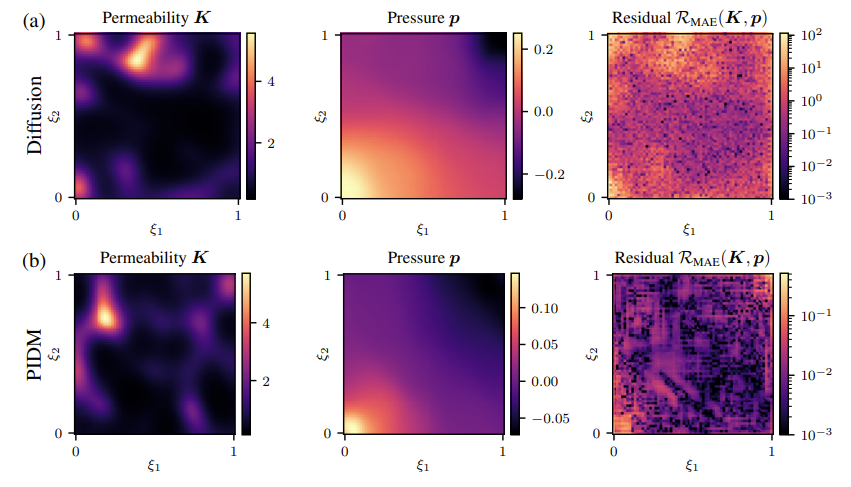
4. Physics-Informed Diffusion Models for Physics-Based Data Generation
Introduction:
Physics-Informed Diffusion Models (PIDMs) embed physical constraints into generative models, ensuring generated data respects governing physical laws. This project enhances diffusion models with physics-based loss terms to generate datasets that align with real-world physics.
Social Impact:
PIDMs provide cost-effective, reliable datasets for engineering simulations, environmental modeling, and material science, reducing reliance on expensive computational simulations.
GitHub Link: Coming soon (to be uploaded after further research development).